
Budget Friendly Gallery Wall Ideas: 15 Easy Looks
A blank wall is the most expensive-looking problem in a home, and also the cheapest to fix. A gallery wall turns photos and prints into a finished room, but the ones online can look like they cost a fortune in matching frames and custom art. They do not have to.
Budget friendly gallery wall ideas work because a gallery wall is mostly about arrangement, not price. A thoughtful layout, a consistent palette, and frames you already own will beat expensive art hung at random heights. Plan the wall before you buy a frame, fill it with free and low-cost art, and hang it in a way your landlord will not mind.
These 15 ideas are all renter-friendly, weekend-sized, and priced for a real budget. Start with one wall, not the whole house.
Plan the Layout Before You Hang Anything
1. Cut paper templates first
Trace each frame onto kraft paper or old wrapping paper, cut the shapes out, and tape them to the wall with painter’s tape. Move them around until the arrangement feels balanced, then hang the real frames over the templates. This one free step prevents the most common gallery wall mistake: a wall full of holes in the wrong places. Step back from across the room, not just from two feet away, before you commit.
2. Keep two to three inches between frames
Tight spacing is what makes a gallery wall read as one intentional piece instead of a random collection. Aim for two to three inches between frames in a grid, and a little more — three to four inches — in a loose salon-style arrangement. Consistent gaps matter more than identical frame sizes, so measure the gap with your fingers or a small spacer block as you go.
3. Anchor the wall at eye level
The center of your gallery wall should sit at about 57 inches from the floor, the height museums use, or just above the furniture it hangs over. Above a sofa, leave six to eight inches between the top of the sofa and the bottom of the lowest frame. Above a console table, the same rule applies. A gallery wall that floats too high is the fastest way to make a room feel unfinished, so anchor it to something.
4. Pick one color story and stick to it
A budget gallery wall looks expensive when the art shares a palette, even if the frames do not match. Choose two or three colors — black and white with warm wood, for example, or soft neutrals with one accent — and pull every print and photo into that range. Printing your own photos in black and white is a free way to unify a mixed collection instantly, and it hides the fact that the pictures came from five different years and three different phones.
Frames That Cost Almost Nothing
5. Spray-paint mismatched frames one color
Thrift stores, dollar stores, and your own closet are full of frames in the wrong color. A can of matte black or warm white spray paint turns them into a matching set for a few dollars, and the uniform color is what makes the wall look curated. Remove the glass and art first, spray in light coats outdoors, and let each coat dry fully. Gold spray paint is the other budget classic: it makes even plain plastic frames look like they came from a home store.
6. Use one frame size for a clean grid
If a salon-style wall feels too chaotic for you, buy one size of inexpensive frame — 8×10 or 11×14 — and hang them in a strict grid. A grid is forgiving: it looks deliberate even with very different art inside, and it is the easiest layout to expand later, one row at a time. Dollar-store frames work fine here because the repetition, not the frame quality, carries the look. This is the same keep-it-simple logic behind our guide to renter friendly DIY wall decor, where a repeatable system beats a one-off splurge.
7. Mix in unframed art for texture
Not everything needs glass. Clipboards, wooden pants hangers, washi tape borders, and simple poster rails hold prints for a few dollars and add texture a wall of identical frames lacks. A clipboard wall is especially good for kids’ art and seasonal prints because you can swap the art in seconds without taking anything off the wall. Keep unframed pieces to about a third of the wall so it still reads as finished, not as a bulletin board.
8. Frame fabric, wallpaper samples, and book pages
Art does not have to come from an art store. A remnant of pretty fabric stretched over cardboard, a wallpaper sample, or a page from a damaged vintage book all make beautiful, nearly free gallery art. Pressed leaves cost nothing if you gather them yourself. Frame things you already love and the wall will feel personal instead of generic.
Layouts for Every Wall
9. Try the salon wall for a collected look
A salon wall — frames of different sizes hung close together, filling the wall from edge to edge — is the most forgiving layout for a budget because it thrives on variety. Start with your largest piece slightly off-center, then build outward, keeping gaps even. The collected look hides the fact that nothing matches, and it is the best layout for a stairwell or a wall that is awkwardly tall. Just keep the outer edges roughly rectangular so the arrangement does not drift.
10. Use a picture ledge so you can swap art anytime
A picture ledge, or a pair of DIY floating shelves, lets you lean frames instead of hanging them, which means no holes, no measuring, and art you can rearrange in minutes. Lean the largest frames at the back, layer smaller ones in front, and add a small plant or candle at one end. Ledges are the renter’s best friend and the easiest gallery wall to refresh for a season: swap two prints and the whole wall feels new.
11. Turn a hallway into a gallery
Hallways are the most underused gallery walls in a home, and they suit a budget project because the narrow space suits small frames. Hang a single row at eye level down the hall, or a loose grid above a bench. Family photos work beautifully here, and adhesive strips keep the frames light and lease-friendly.
12. Build a gallery around the TV
A television is a big black rectangle that dominates a wall, and a gallery wall is the cheapest way to tame it. Hang frames around the TV in a loose rectangle, keeping the same spacing, and the screen stops being the only thing you see. Use smaller frames close to the TV and larger ones farther out, and keep the palette calm so the wall does not compete with what is on screen. This trick works especially well in a living room makeover, and our guide to a budget living room makeover under $200 has more low-cost ways to make the main room feel finished.
Budget Art and Personal Touches
13. Print your own photos at home or at a drugstore
Your own photos are free art, and they are the art guests actually stop to look at. Print favorites in black and white at a drugstore kiosk or on a home printer, trim them with a white border, and they look instantly intentional. Mix one or two personal photos into every group of prints so the wall tells your story, not a catalog’s.
14. Add a mirror, a clock, or a woven piece
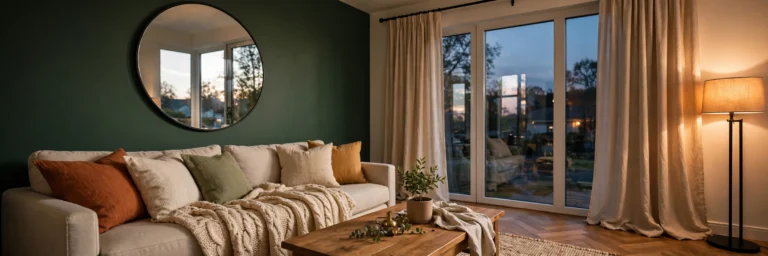
One non-frame object breaks up a wall of rectangles and makes the whole arrangement feel designed. A round mirror reflects light and makes a small room feel bigger, a simple wall clock adds function, and a woven wall hanging or macrame piece adds softness that frames cannot. One accent object is enough; two or three and the wall starts to feel cluttered. Place it off-center, not dead in the middle, for a more natural look.
15. Leave room to grow
The best budget gallery walls are not finished in a day. Hang what you have, live with it for a week, and add pieces as you find them. A wall that grows slowly looks collected rather than decorated, and it spreads the cost across months. Leave one empty spot on purpose, and resist the urge to fill every inch — white space is part of the design, and it is free.
FAQ
How much does a budget gallery wall cost?
Most budget gallery walls cost $30 to $100 total: thrifted or dollar-store frames, spray paint, and prints you make yourself or order cheaply. The biggest savings come from printing your own photos, spray-painting mismatched frames one color, and using a picture ledge so you can reuse the same frames for years.
How do I hang a gallery wall without damaging the walls?
Use adhesive picture-hanging strips rated for each frame’s weight, lean frames on a picture ledge, or use small nails in a single stud if your lease allows them. Adhesive strips hold most small and medium frames, remove cleanly, and are the safest choice for renters. For heavy frames, use two strips or a proper wall anchor rather than risking a fall.
What size frames should I use for a gallery wall?
A mix works best: one or two larger frames (11×14 or 16×20) as anchors, with mostly 8×10 and 5×7 frames filling in around them. If you prefer a tidy look, use a single size throughout in a grid. Either way, keep the spacing between frames consistent — that consistency is what makes mixed sizes look intentional.
How do I arrange a gallery wall on a small wall?
Use smaller frames, a tight grid, or a single picture ledge, and keep the palette to two or three colors so the wall does not feel busy. A small apartment decorating ideas on a budget approach helps here too: one well-planned wall beats three crowded ones, and a mirror in the arrangement will make the room feel larger.
A gallery wall does not need a big budget, just a plan, a palette, and a free afternoon. Pick your wall, cut your paper templates, and hang the first three frames this weekend — the rest of the wall will follow. Here at Nest Crafted, the walls that get the most compliments are usually the ones that cost the least.


2 Comments