Christmas Decor on a Budget (Festive for Under $50)
A gorgeous Christmas home doesn’t require a gorgeous Christmas budget. The houses that look like they stepped out of a holiday movie aren’t the ones that spent the most — they’re the ones that spent deliberately: one clear color story, layered lighting, and natural textures doing the heavy lifting.
Here’s how to decorate your whole home for Christmas for $40–$50 total, in a single weekend. Everything below is beginner-friendly, renter-safe, and packs flat into one tote when January comes.
Start With a Color Story (Free, and It Saves the Most Money)
Random red-and-green stuff looks like a clearance bin exploded. A color story looks like design. Pick one before you buy anything:
- Classic warm: deep red, gold, warm white lights, natural pine. Timeless, photographs beautifully.
- Nordic neutral: whites, creams, natural wood, eucalyptus. Elegant and calm — very “Pinterest Christmas.”
- Rustic farmhouse: burlap, plaid, galvanized metal, pinecones. Cozy and forgiving of imperfect DIY.
- Winter woodland: forest green, champagne, frosted textures, lots of natural greenery.
Write your palette on a sticky note and take it to the store. Every purchase gets checked against it. This one habit is the difference between “$50 that looks like $200” and “$50 of mismatched clutter.”
The $50 Whole-Home Formula
Decorate in this order — impact per dollar, highest first:
1. Lighting — the Christmas cheat code ($10–$15)
Christmas is a lighting holiday. Warm white light on greenery is 80% of the entire “cozy Christmas” effect:
- Warm white string lights ($5–$8 per strand, dollar store or big-box sale): one strand on the tree, one along the mantel or a shelf, one in a glass vase or cloche. Three strands = a transformed home.
- Battery tea lights ($1–$3 for a multipack): inside mason jars, lanterns, or tucked into garland. The flickering ones read as candlelight from across the room.
- The one-splurge rule: if you buy one thing, make it good lights. Cool-white or multicolor lights are cheaper-looking — warm white (2700K) is the designer choice.
Safety note: never leave real candles burning unattended, and keep all string lights away from dried greenery. Check old light strands for cracked insulation or warm plugs — retire anything that smells hot or flickers oddly.
2. Natural greenery — free or nearly free ($0–$8)
Greenery is the single biggest visual upgrade in Christmas decor, and it’s the cheapest:
- Forage: pine, cedar, and fir clippings from your yard (or a neighbor’s, with permission). Many Christmas tree lots give away branch trimmings for free — ask in early December.
- Garland bases ($5–$8 for a 9-foot faux garland): one good garland draped on the mantel, entryway table, or stair rail covers more visual ground than any ornament.
- The vase trick: a tall vase of bare branches + one string of fairy lights = a $3 statement piece for any corner.
3. The tree, styled on purpose ($10–$15)
Whether your tree is real ($30–$60 — outside this budget, so we’re assuming faux or a small real one) or a thrifted faux tree ($10–$20 at thrift stores in October), styling is what makes it look expensive:
- Ribbon, not tinsel: one wide spool of wired ribbon ($4–$6) woven through the tree in loops looks a hundred times better than tinsel and is reusable for years.
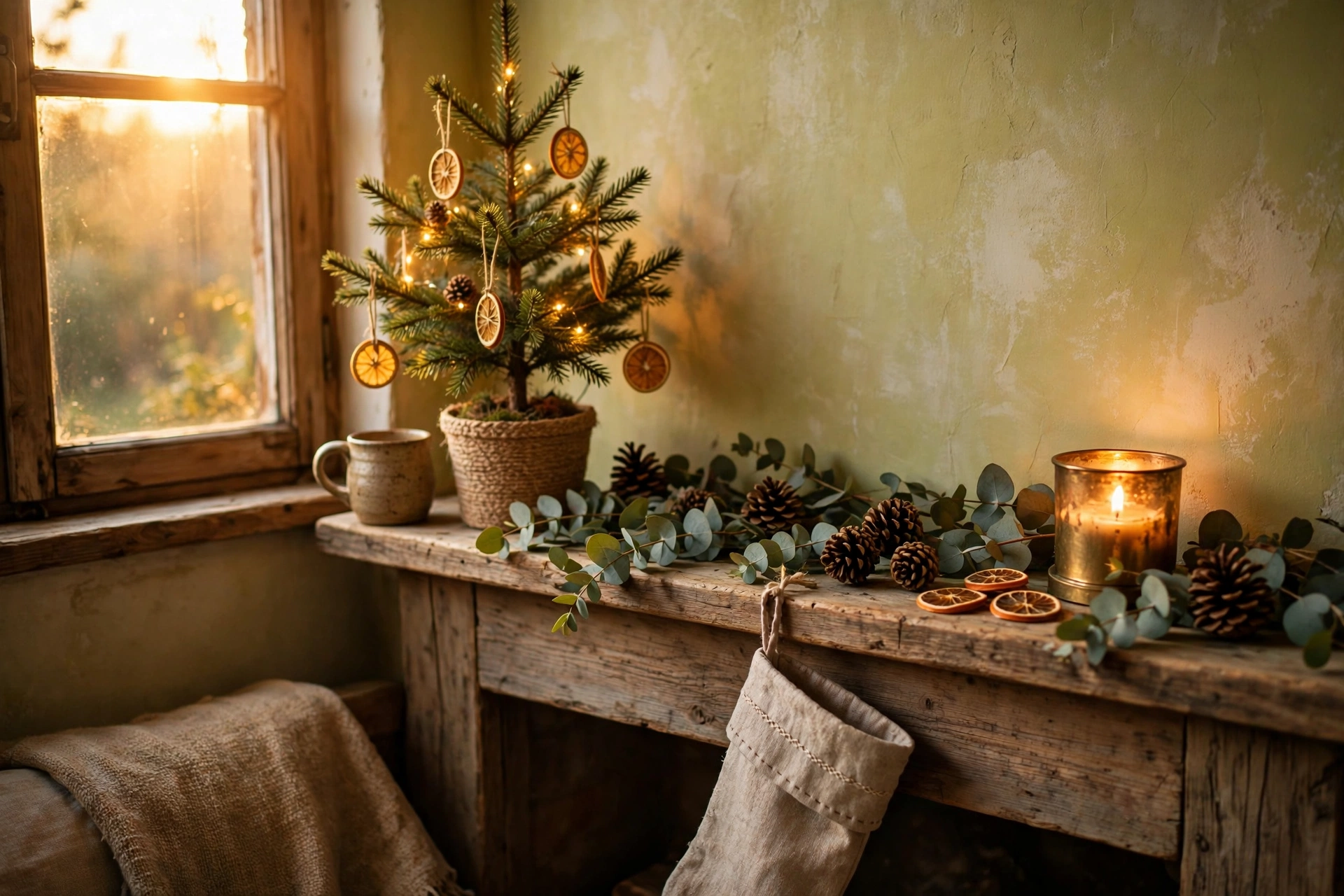
- Fill with texture: pinecones (free, foraged), dried orange slices ($2 to make — slice oranges thin, bake at 200°F for 3 hours), cinnamon stick bundles tied with twine ($3).
- Ornament math: you need fewer than you think. Cluster ornaments in groups of 3 at different depths instead of spacing them evenly. A 6-foot tree looks full with 30–40 ornaments if they’re clustered.
4. One focal point per room ($5–$10)
Don’t sprinkle decor everywhere — give each room one moment:
- Living room: the tree + lit garland on the mantel (or a garland swag on the TV console if you have no mantel).
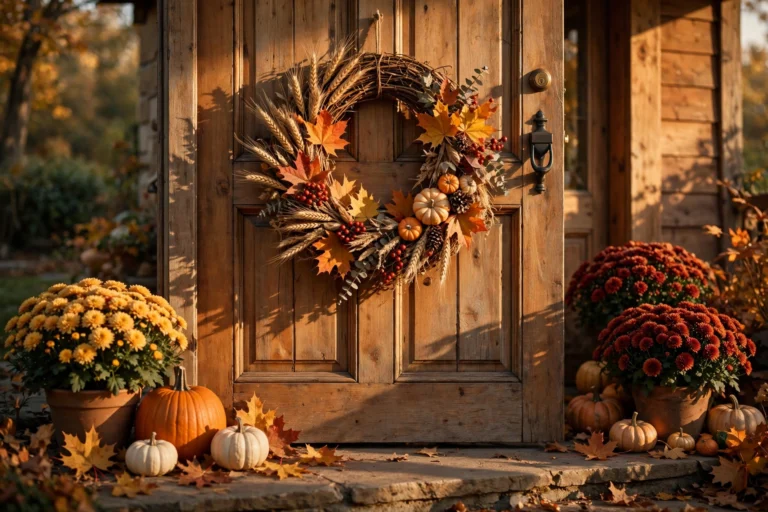
- Entryway: a wreath on the door (see our DIY fall wreath guide — swap fall stems for pine and berries) + a lit lantern by the door.
- Kitchen/dining: a simple centerpiece — greenery runner down the table with tea lights. Five minutes, massive effect.
- Bedroom: one lit branch in a vase on the dresser. That’s it. Subtle and lovely.
5. Scent — the invisible decor ($2–$3)
Simmer pots cost almost nothing and make your house smell like Christmas morning: orange slices, cinnamon sticks, cloves, a sprig of pine in a pot of water on low heat. Guests will ask what candle you’re burning. Total cost: about $2, and it beats any $25 candle.
5 DIYs That Look Store-Bought
Dried orange garland: thin-sliced oranges baked low and slow, strung on twine. Costs $2, looks like a $20 Etsy garland, smells incredible.
Pinecone ornaments: foraged pinecones + a dab of white paint on the tips (snow effect) + twine hangers. Free, and kids can make a whole tree’s worth.
Kraft paper gift wrap station: brown kraft paper ($5 roll) + twine + sprigs of greenery + a wax seal or sticker. Your gifts become part of the decor under the tree.
Mason jar luminaries: jars + battery tea lights + a little Epsom salt “snow” in the bottom. Line a windowsill or the porch steps.
Paper snowflake garland: white coffee filters or parchment paper cut into snowflakes, strung on fishing line in a window. Free, and genuinely beautiful backlit.
What to Skip on a Budget
- Matching ornament sets. The $40 “coordinated tree set” looks flat. Mixed textures (matte, shiny, natural) at varied sizes look richer for less.
- Village scenes and collectibles. They’re a money pit and they date fast. One beautiful nativity or a single statement piece beats a shelf of small things.
- Outdoor inflatables. One $50 inflatable eats the whole budget. A wreath, lit garland, and luminaries on the porch look more elegant for a tenth of the cost.
- Trendy colors you’ll hate in February. Hot pink Christmas is fun on Instagram and expensive in real life. Stick to your timeless palette; add one trendy accent (a ribbon, a throw pillow) if you must.
Budget Breakdown
| Item | Cost |
|---|---|
| Warm white string lights (2–3 strands) | $10–$15 |
| Faux garland base (9 ft) | $5–$8 |
| Wired ribbon (1 wide spool) | $4–$6 |
| Battery tea lights (multipack) | $1–$3 |
| Ornament filler (thrifted or dollar store) | $5–$8 |
| DIY supplies (oranges, twine, kraft paper, jars) | $5–$8 |
| Greenery (foraged or tree-lot trimmings) | $0–$2 |
| Total | $30–$50 |
The January Pack-Down (30 Minutes)
Wrap lights around cardboard to prevent tangles. Nest ornaments in egg cartons or divided bins. Coil garland loosely — never fold it sharply. Label one tote “CHRISTMAS DECOR” with your color palette written on the lid, so next November you shop your own stash first.
How far in advance should I decorate for Christmas on a budget?
Start the weekend after Thanksgiving for the full effect, but buy supplies in October and early November — thrift stores and dollar stores stock Christmas earliest and cheapest. Lights and ribbon sell out or go full-price by mid-December.
FAQ
How can I decorate for Christmas with no money?
Forage greenery, make paper snowflakes and dried-orange garlands, rearrange what you own around a candle-and-greenery focal point, and simmer a stovetop potpourri. Lighting you already own (string lights, tea lights) does most of the visual work for free.
What are the cheapest Christmas decorations that look expensive?
Wired ribbon on the tree, warm white lights everywhere, natural greenery, dried orange slices, and kraft-paper gift wrap. Texture and light read as “expensive”; plastic and glitter read as “cheap.”
How do I make a small apartment feel Christmassy on a budget?
One focal point: a small tree or a lit branch arrangement, plus a garland swag somewhere and a simmer pot on the stove. Small spaces need fewer, warmer elements — not more stuff.
When do Christmas decorations go on clearance?
December 26th, obviously — but the smart buy is the day after Christmas for next year: lights, ribbon, and ornaments drop 50–75%. Store them in your labeled tote and you’re pre-decorated for next November.