DIY Accent Wall Ideas on a Budget (7 Looks Under $60)
A DIY accent wall costs $25 to $60 for most rooms: one gallon of paint runs $25 to $35, peel-and-stick wallpaper $30 to $60, and board and batten $40 to $60. Pick one wall, measure it, and buy only what that wall needs — paint and tape for the cheapest route, trim and caulk for a built-in look.
Here are seven genuinely different accent wall ideas, ranked from easiest to most ambitious, each with real costs and honest difficulty ratings.
1. Paint — The Classic ($25–$35)
Still the king. One gallon of paint, two coats, one transformed wall.
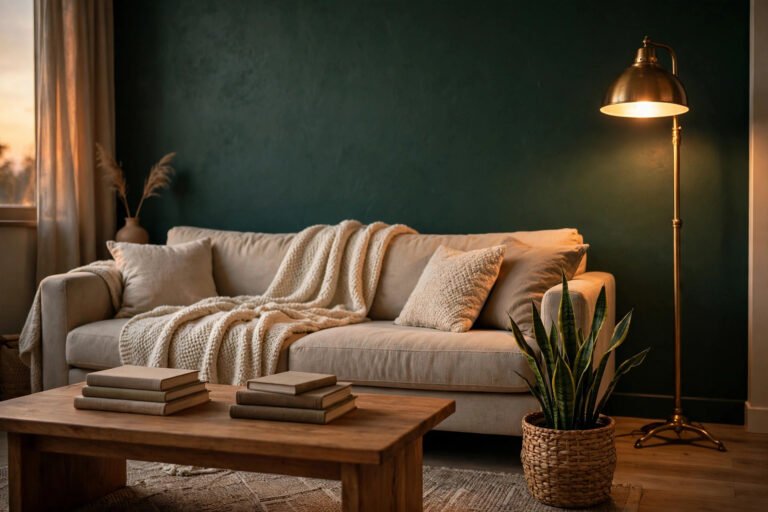
How to choose the color: go 2–3 shades deeper than your other walls for a cohesive look, or pick a saturated color you love for drama. Warm whites and greiges are safe; deep green, navy, and terracotta are the current favorites that also age well.
Pro tips:
– Sample first: $5 sample pots, painted in a 2-foot square, viewed in morning and evening light. Colors shift dramatically.
– Use painter’s tape ($6) and a angled brush for crisp edges — the edge quality is what separates DIY from professional.
– Two thin coats beat one thick coat. Always.
Difficulty: 2/10. Time: 3–4 hours including drying between coats.
2. Peel-and-Stick Wallpaper ($30–$60)
The renter’s miracle. Modern peel-and-stick wallpaper looks nothing like the shelf-liner stuff from decades ago — grasscloth textures, mural prints, bold geometrics.
How to nail it:
– Measure the wall and order 10% extra. Pattern matching eats material.
– Start from the top, peel 12 inches at a time, and smooth with a plastic smoother or credit card as you go. Bubbles are fixable — lift and re-smooth.
– For pattern alignment: hang the first panel perfectly plumb using a level. Every panel after follows the first, so panel one determines everything.
Cost: $1–$3 per square foot; a standard 8×10 wall runs $30–$60.
Difficulty: 4/10. Time: 2–3 hours. Renter-friendly: yes, fully removable.
3. Board and Batten ($40–$60)
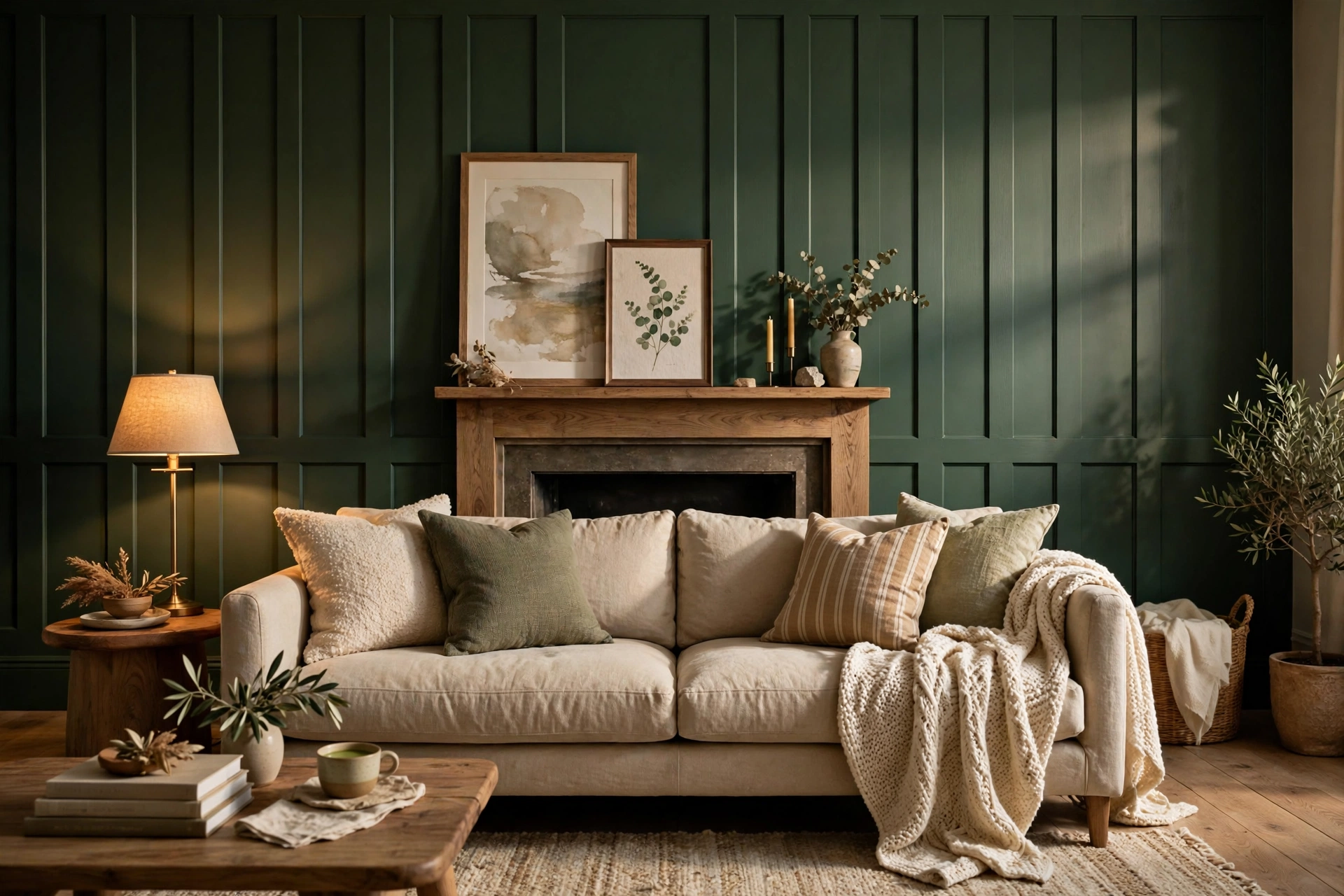
The look: vertical and horizontal trim strips forming rectangles on the wall, painted one color. It reads custom-millwork expensive and it’s just pine strips and paint.
Materials:
– 1×2 or 1×3 pine furring strips ($1–$2 each; a standard wall needs 8–12)
– Brad nails or construction adhesive ($8)
– Caulk ($5) — this is the secret; caulked seams look built-in, uncaulked looks DIY
– Paint (often you already have wall paint)
Steps: plan your grid on paper first (rectangles 18–24 inches wide look best), attach vertical strips with nails or adhesive, add the horizontal top and bottom rails, caulk every seam, paint everything one color including the wall behind.
Difficulty: 5/10 (needs a saw or have the store cut strips). Time: one full day.
4. Limewash / Faux Plaster ($30–$45)
The cloudy, old-world texture all over design feeds. Achieved with limewash paint ($30–$40 per quart, covers one wall) applied in crisscross brush strokes with a big block brush.
Why it works: the mottled finish hides wall imperfections beautifully — it’s the most forgiving “fancy” finish. No taping perfection needed; the texture is the point.
Difficulty: 3/10. Time: 2–3 hours. Looks far more expensive than it is.
5. Wood Slat / Fluted Panel Wall ($40–$60)
Thin vertical wood slats spaced evenly across the wall — the modern-rustic look that’s everywhere right now.
Budget version: 1×2 pine strips ($1 each), spaced 1–2 inches apart, attached with brad nails or adhesive, stained or painted. A 10-foot wall needs ~20 strips.
Even cheaper version: paint vertical stripes in two tones of the same color family. From across the room, the fluted illusion holds surprisingly well. ($25 in paint.)
Difficulty: 4/10. Time: 3–5 hours.
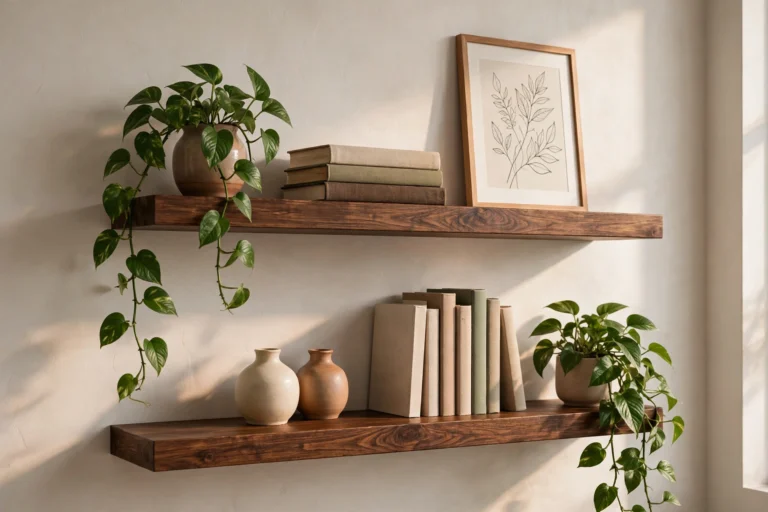
6. Gallery Wall as Accent Wall ($10–$25)
Not paint — a full wall of art is the accent. The trick to a gallery wall that looks curated instead of chaotic:
- One unifying element: same frame color, same mat color, or same subject family. Pick one; it does 80% of the cohesion work.
- Lay it out on the floor first. Photograph the arrangement, then transfer to the wall.
- Start with the biggest piece at eye level, slightly off-center. Build outward.
- Free art sources: your own photos printed at the drugstore ($0.50–$3 each), free printable art, kids’ artwork, pages from old books, pressed leaves in frames.
Difficulty: 3/10. Time: 2 hours. Renter-friendly: yes, with adhesive hanging strips.
7. Stenciled Pattern ($15–$30)
A large wall stencil ($12–$20) + a dense foam roller + patience = a wallpaper look for a tenth of the price.
Keys to success:
– Use very little paint on the roller (offload on paper towel first) — bleeding under the stencil is the only way this fails.
– Start in the least visible corner; your technique improves as you go.
– For imperfect walls, choose an all-over small pattern — it hides flaws better than large geometrics.
Difficulty: 4/10 (tedious, not hard). Time: 3–6 hours depending on wall size.
Which One Should You Choose?
| Idea | Cost | Difficulty | Renter-friendly | Wow factor |
|---|---|---|---|---|
| Paint | $25–$35 | 2/10 | No | ★★★ |
| Peel-and-stick wallpaper | $30–$60 | 4/10 | Yes | ★★★★ |
| Board and batten | $40–$60 | 5/10 | No | ★★★★★ |
| Limewash | $30–$45 | 3/10 | No | ★★★★ |
| Wood slats | $40–$60 | 4/10 | Semi | ★★★★★ |
| Gallery wall | $10–$25 | 3/10 | Yes | ★★★ |
| Stencil | $15–$30 | 4/10 | No | ★★★★ |
First accent wall ever? Paint or limewash. Renting? Peel-and-stick or gallery wall. Want the biggest transformation? Board and batten or wood slats.
Color Pairing Guide: What Goes With Your Room
Stuck on color? Match the accent to what you already own:
- Gray/beige sofa + neutral room: deep green, navy, or terracotta. All three add depth without fighting neutrals.
- Warm wood furniture: muted sage, warm white (try a limewash), or clay. Stay in the warm family.
- White/bright room: charcoal, forest green, or a moody blue. The contrast is the point — commit to it.
- Colorful eclectic room: pick the darkest tone already in your textiles and go one shade deeper. The wall will tie the whole room together instead of adding a new color.
The undertone rule: hold your paint swatch against your sofa fabric and flooring in daylight. If the undertones clash (pink-beige wall against yellow-beige sofa), you’ll see it forever. Match undertones first, color second.
How do I do an accent wall behind a TV?
Mount the TV first, then design around it — the TV becomes part of the composition. Board and batten or wood slats look fantastic behind TVs (the texture hides cables visually), and dark colors make the screen blend in when it’s off. Run cables through a $10 cord cover painted to match.
Cost Breakdown: What a DIY Accent Wall Really Costs
Most accent walls cost less than a dinner out, because you are only covering one wall. The table below compares the four most popular methods on a standard 8 by 10 foot wall, using realistic 2026 US budget-store prices.
| Method | Materials cost | Time | Skill level |
|---|---|---|---|
| Paint | $25–$35 | 3–4 hours | Beginner |
| Peel-and-Stick Wallpaper | $30–$60 | 2–3 hours | Beginner |
| Board and Batten | $40–$60 | One full day | Intermediate |
| Limewash or Plaster Effect | $30–$45 | Half a day | Beginner to intermediate |
Three things push the price up: wall size (a 12-foot wall needs roughly twice the paint or paper of an 8-foot one), trim work (board and batten needs strips, nails, and caulk on top of paint), and tools you don’t already own (a level, a good angled brush, and a plastic smoother are one-time buys that make every future wall cheaper). If already own the basics, the paint route can land under $25.
Not sure how much paint your wall needs? Try the free Accent Wall Paint Calculator — enter your wall size and get gallons and cost in seconds.
Step-by-Step: Paint an Accent Wall in One Weekend
Paint is the cheapest, fastest accent wall, and it forgives mistakes better than any other method. Here is the full sequence, start to finish.
- Pick the wall and the color. Choose the wall your eye lands on first when you enter the room, then test a $5 sample pot in a 2-foot square and check it in morning and evening light before committing.
- Prep the wall. Remove outlet covers and nails, fill holes with spackle, let it dry, sand it smooth, and wipe away the dust so the paint grips evenly.
- Tape the edges. Run painter’s tape along the ceiling, baseboards, and neighboring walls, pressing the edge down firmly with a credit card so paint cannot bleed underneath.
- Prime only if you need it. Skip primer on a wall that is already painted in a similar color, but use one coat on bare drywall, patched areas, or a very dark existing color.
- Cut in first. With an angled brush, paint a 2 to 3 inch border along the taped edges and around outlets, so the roller never has to get close to a clean line.
- Roll in a W pattern. Load the roller, roll a W shape on the wall, then fill it in with even strokes, working top to bottom in 3-foot sections so the edge stays wet.
- Apply a second coat. Let the first coat dry fully (usually 2 to 4 hours), then roll a second thin coat the same way — two thin coats always beat one thick one.
- Remove the tape and touch up. Pull the tape off while the second coat is still slightly tacky, at a 45-degree angle, then touch up any bleeds with a small brush once the wall is dry.
FAQ
What wall should be the accent wall?
The wall your eye lands on first when entering the room — usually behind the bed, sofa, or fireplace. It should be the largest uninterrupted wall; skip walls broken up by doors and windows.
What is the cheapest accent wall idea?
Paint ($25–$35) or a gallery wall using art you already own ($10 in hanging hardware). Both transform the room for less than a takeout dinner for two.
Are accent walls still in style?
Yes, but the trend moved from “one random red wall” to texture and tone: limewash, wood slats, board and batten, and moody deep colors. The 2010s bright accent wall is out; dimensional and tonal accent walls are in.
Can I do an accent wall in a rental?
Absolutely: peel-and-stick wallpaper, a gallery wall with adhesive strips, or large-scale leaning art. All fully reversible, zero paint.