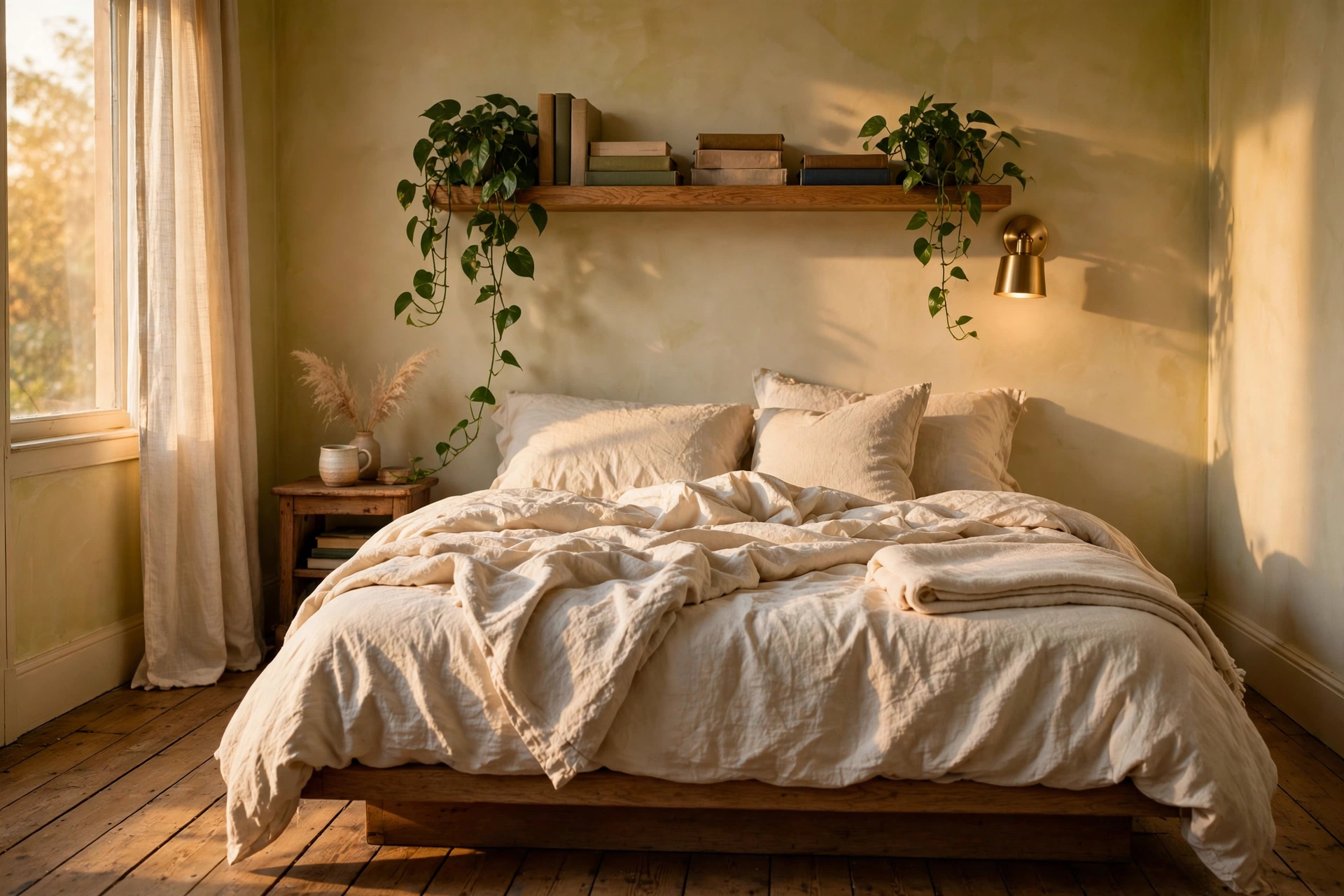
Small Bedroom Organization Ideas on a Budget
Your bedroom should be the calmest room in your house. But when it’s small and disorganized, it becomes the room you avoid — clothes on the chair, nightstand buried under clutter, closet door that barely closes. The good news: you don’t need a bigger bedroom or a bigger budget. You need a plan that treats every square inch like it matters, because in a small bedroom, it does.
Here at Nest Crafted, we’ve reorganized more tiny bedrooms than we can count, and the same truth shows up every time: small bedrooms don’t have a space problem. They have a systems problem. Fix the systems, and the room feels twice as big — for well under $100 total.
Start With a Ruthless Reset (Free)
Before you buy a single bin, do this. It costs nothing and it’s the step everyone skips.
Pull everything out of the bedroom that doesn’t belong there. Not “sort of” belongs — if you haven’t used it in the bedroom in the last month, it leaves. Laundry goes to the laundry room. Random mail goes to the office. That stack of books you finished in June? Donate or shelve them elsewhere.
Then do the famous four-box sort on what’s left: Keep, Relocate, Donate, Trash. Be honest. A small bedroom cannot absorb “maybe someday” items. If you’re keeping something, it needs a designated home in this room — not a vague “I’ll find a spot for it.”
Cost: $0. Time: 1–2 hours.
Zone Your Bedroom Into 4 Stations
Small bedrooms feel chaotic because every surface tries to do every job. Fix it by assigning each area one purpose:
- Sleep station — the bed and nightstand. Only sleep-related items live here.
- Dress station — closet, dresser, and wherever you get ready in the morning.
- Drop station — one small tray or basket by the door for keys, wallet, glasses, phone.
- Hidden station — under the bed and the back of the closet door. This is your secret storage.
When every item has a station, tidying takes five minutes instead of forty-five. This is the single highest-impact change you can make, and it costs nothing.
The Nightstand: Your Clutter Command Center
The nightstand is where small-bedroom clutter goes to multiply. Here’s the system:
- Top surface rule: lamp, one book (currently reading), water glass, phone charger. That’s it. Four items max.
- Add a small tray (a thrifted saucer or a $5 bamboo tray works) to corral the small stuff — lip balm, glasses, remote — so it reads as “styled” instead of “scattered.”
- Drawer divider: a $3–$6 adjustable drawer organizer turns the junk drawer into a real drawer. Chargers in one slot, medications in another, done.
If you don’t have a nightstand, a small wall-mounted shelf ($12–$18) next to the bed does the same job and keeps floor space open — which matters enormously in a small room.
Under-Bed Storage: Your Hidden Square Footage
The space under your bed is roughly 20+ square feet of storage you’re probably wasting. Here’s how to claim it:
- Flat rolling bins ($8–$15 each) for off-season clothes, extra bedding, or shoes. Measure your clearance first — standard frames give you 7–8 inches.
- Vacuum-seal bags ($10 for a multi-pack) for bulky winter coats and comforters. They shrink to a third of their size.
- DIY option: slide shallow cardboard boxes (covered in wrapping paper or fabric for $3) under the bed. Not glamorous, extremely effective.
Label the ends of bins facing out so you can grab what you need without pulling everything out.
Cost: $10–$30 for a full under-bed system.
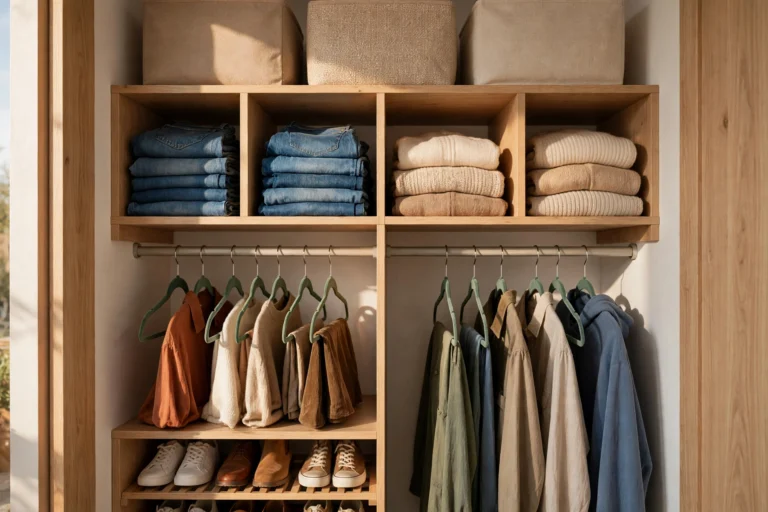
Closet Fixes That Double Your Space
Small bedroom, small closet — the usual combo. These three changes make the biggest difference:
1. Double your hanging space
A hanging closet rod extender ($8–$12) instantly creates two levels of hanging space where you had one. Shirts and folded pants on top, longer items below.
2. Go vertical with slim hangers
Bulky plastic hangers eat inches. A 30-pack of slim velvet hangers ($12–$15) frees up real rod space and keeps clothes from sliding off. This one change alone can reclaim 20–30% of a crowded rod.
3. Use the closet door
An over-the-door organizer ($10–$18) holds shoes, accessories, scarves, or cleaning supplies. The back of the door is free real estate most people ignore.
4. Uniform bins on the top shelf
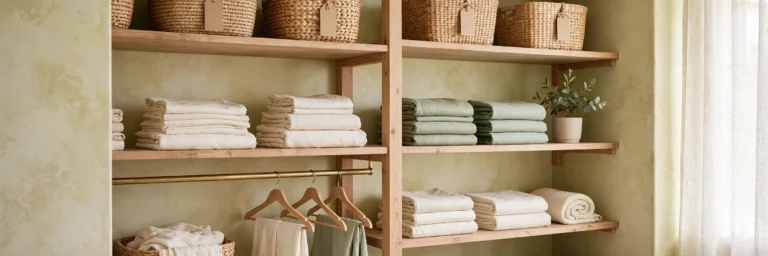
One matching set of fabric bins ($15–$25 for a set) on the closet’s top shelf turns the “mystery pile” zone into labeled, grab-and-go storage: “winter accessories,” “gift wrap,” “sentimental.”
Total closet overhaul: $30–$50.
Walls Are Storage Too
In a small bedroom, floor space is precious and wall space is free. Use it:
- Floating shelf above the bed or dresser ($15–$25 for a set of two) for books, plants, or decor — gets items off the nightstand and dresser.
- Pegboard by the dress station ($12–$20) for jewelry, hats, bags, and accessories. Everything visible, nothing in a tangled drawer.
- Over-the-door hooks ($6–$10) on the bedroom door for tomorrow’s outfit, robes, or bags. Laying out clothes the night before also makes mornings calmer.
The 5-Minute Nightly Reset
Organization systems die without maintenance. The fix is stupidly simple: every night, set a timer for five minutes and return everything to its station. Bed made in the morning, five-minute reset at night, and a small bedroom stays organized indefinitely. It’s the habit that protects all the work you just did.
Realistic Budget Breakdown
| Fix | Cost |
|---|---|
| Four-box reset + zoning | $0 |
| Nightstand tray + drawer organizer | $8–$12 |
| Under-bed bins (2–3) | $15–$30 |
| Slim hangers (30-pack) | $12–$15 |
| Closet rod extender | $8–$12 |
| Over-the-door organizer | $10–$18 |
| Wall shelf or hooks | $12–$25 |
| Total | $65–$112 |
You don’t need to do it all at once. Start with the free reset and one $15 purchase. The room will already feel different.
Small Bedroom Layout Tricks (No New Furniture)
If your room still feels tight after organizing, the layout might be the culprit:
- Float the bed if you can. Even 6 inches off the wall on one side creates a walkway and makes the room feel designed instead of stuffed. In truly tiny rooms, push the bed into a corner — but make it a deliberate corner with the nightstand on the open side.
- Ditch one piece of furniture. Most small bedrooms have one item too many — usually a chair that became a clothes pile or an oversized dresser. Removing one piece and replacing its function (hooks for the chair’s clothes, under-bed bins for the dresser’s overflow) opens the room visually.
- Mirror placement. A mirror opposite or adjacent to the window (never opposite clutter) bounces light and doubles the sense of space. A $15–$25 full-length leaning mirror does the job.
- Keep the floor visible. The more floor you can see, the bigger the room feels. That’s why wall-mounted nightstands, floating shelves, and under-bed bins (which hide the visual mess) all contribute to spaciousness.
FAQ
How do I organize a really small bedroom with no closet?
Lean on the other three stations hard: under-bed rolling bins become your “closet,” a freestanding garment rack ($20–$30) handles hanging clothes, and wall hooks take bags and jackets. A small dresser doubles as a nightstand to save floor space.
What’s the cheapest way to organize a bedroom?
The four-box declutter plus zoning costs nothing and does half the work. After that, dollar-store bins, thrifted trays, and DIY under-bed boxes can finish the job for under $25.
How do I keep a small bedroom organized long-term?
The five-minute nightly reset. Systems fail from drift, not from bad design — five minutes a night keeps everything in its station permanently.
Should I buy matching storage bins or just use what I have?
Use what you have first. Matching bins look great and make labeling easier, but they’re a phase-two upgrade. Function before aesthetics — always.