Small Kitchen Organization Ideas (15 That Actually Work)
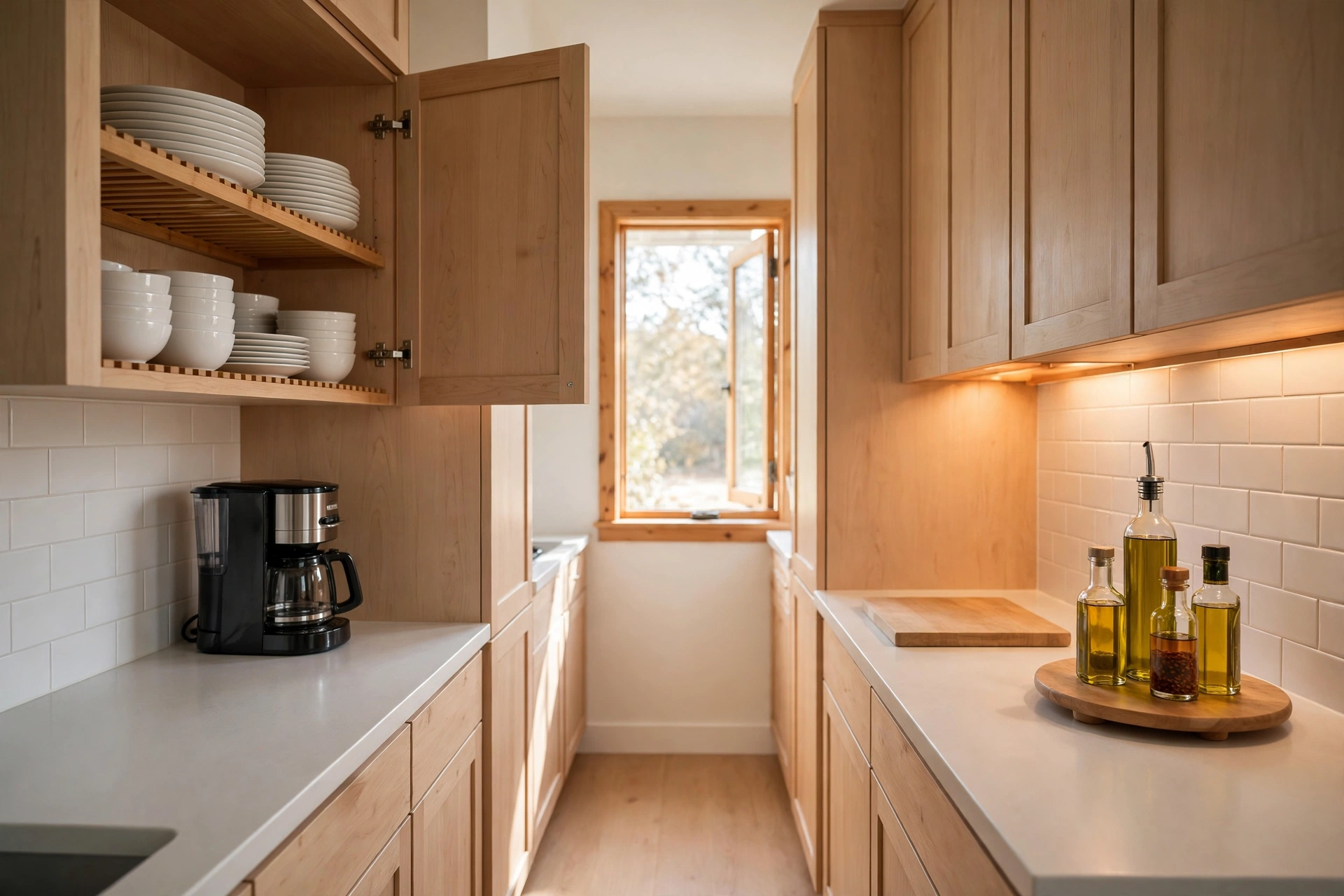
Small kitchens punish disorganization more than any other room. In a big kitchen, clutter spreads out. In a small kitchen, one messy counter makes the whole room feel unusable. I’ve cooked in a galley kitchen barely wider than my arm span, and I can tell you: the difference between a frustrating small kitchen and a delightful one is almost entirely organization, not square footage.
The fixes below cost $40–$80 total and most take an afternoon. Let’s make your small kitchen work harder.
Rule #1: Counters Are for Cooking, Not Storage
This is the golden rule of small kitchens. Every item living permanently on your counter should earn its spot by being used daily. The coffee maker stays. The bread box you open twice a week? Cabinet. The decorative canisters? Pretty, but they’re eating prep space.
Walk your counters right now and relocate anything you don’t touch every single day. Most small kitchens instantly gain 30–40% more usable counter space from this one move. Cost: $0.
Cabinet Zones: Stop Hunting for Things
Small kitchens usually have few cabinets, so each one needs a job:
- Cooking zone (near the stove): oils, spices, cooking utensils, pots and pans
- Prep zone (near the main counter): cutting boards, knives, mixing bowls, measuring cups
- Dish zone (near the sink/dishwasher): plates, glasses, dish soap, drying rack
- Food zone (pantry cabinet): dry goods, snacks, canned items
When zones are set, you stop opening six cabinets to make one meal. Label the inside of cabinet doors with a $3 label maker or masking tape if your household needs the reminder.
Inside the Cabinets: Vertical Is Everything
Cabinets are deep boxes that waste their own height. Fix that:
Shelf risers ($8–$15 each)
A wire or bamboo shelf riser instantly doubles a cabinet shelf — plates below, bowls above. Two risers in your most-used cabinet is the highest-ROI purchase on this whole list.
Door-mounted organizers ($6–$12)
The inside of cabinet doors holds spices, wraps, cleaning supplies, and cutting boards. Adhesive or over-door racks need no drilling, which renters will appreciate.
Turntables ($7–$12)
A lazy Susan in a deep corner cabinet ends the era of expired cans hiding in the back. One turntable for oils and vinegars near the stove, one for condiments in the pantry cabinet.
Stackable clear bins ($10–$18 for a set)
Group like items — baking supplies in one, snack bags in another — so you pull out one bin instead of avalanching the whole shelf. Clear matters: if you can’t see it, you’ll buy a duplicate.
The Pantry Cabinet (Even a Tiny One)
No walk-in pantry? A single cabinet works fine with a system:
- Decant the big three — flour, sugar, rice — into uniform airtight containers ($12–$20 for a set). They stack, they seal, and you can see levels at a glance.
- Group by meal, not by type. “Taco night” bin, “pasta night” bin. It sounds fussy; it saves weeknight sanity.
- First row = this week’s food. When you unpack groceries, new items go behind, current-week items in front. Built-in rotation, zero waste.
Drawer Fixes
- Knife drawer instead of a block: an in-drawer knife dock ($12–$18) frees a full square foot of counter and is safer with kids.
- Utensil dividers: an expandable bamboo divider ($10–$15) beats the tangled utensil pile. One slot per tool type.
- The “one in, one out” rule for gadgets: small kitchens can’t absorb single-use gadgets. If the avocado slicer arrives, something leaves.
Walls and Dead Spaces
- Magnetic knife strip ($10–$15) on the wall — frees the drawer and the counter.
- Pegboard or rail with hooks ($12–$20) near the prep zone for frequently used utensils, measuring cups, even small pots.
- Above the cabinets: if there’s a gap between cabinets and ceiling, that’s storage for rarely used items (holiday platters, the waffle maker) in labeled bins — not a dust-collecting display shelf.
- Side of the fridge: magnetic spice racks or a slim rolling cart ($20–$30) that slides into the gap between fridge and wall — the classic dead space in small kitchens.
The Fridge: The Forgotten Zone
- Clear bins for categories (dairy, condiments, leftovers) — same principle as the pantry.
- “Eat first” box at eye level for leftovers and soon-to-expire items. Food waste drops noticeably.
- Wipe a shelf every time you unload groceries. Two minutes, never a big job.
Realistic Budget Breakdown
| Fix | Cost |
|---|---|
| Counter purge + cabinet zones | $0 |
| 2 shelf risers | $16–$30 |
| Door organizers (2) | $12–$24 |
| Turntable | $7–$12 |
| Stackable bins set | $10–$18 |
| Airtight container set | $12–$20 |
| Magnetic knife strip | $10–$15 |
| Total | $67–$119 |
Start with the free purge and one $15 purchase (shelf risers). You’ll feel the difference before you spend the rest.
The $25 Starter Kit: Buy in This Order
If the full list feels like a lot, buy in this order — each purchase pays for itself in daily frustration saved:
- Shelf risers ($8–$15): the single biggest storage gain per dollar. Start here.
- Clear stackable bins ($10–$18): tame one chaotic cabinet or the pantry shelf.
- Tension rod for under-sink ($6–$8): if cleaning supplies are currently a pile, this fixes it.
That’s $24–$41 for a kitchen that already feels twice as organized. Everything else on the list is phase two — buy it when a specific frustration (not a vague urge) tells you to.
Can I organize a small kitchen without buying anything?
Yes — the counter purge, cabinet zoning, and pantry grouping cost nothing and deliver most of the improvement. After that, repurpose what you own: shoeboxes as drawer dividers, jars as canisters, a tension rod you already have for the under-sink cabinet. Buy organizers only for frustrations the free fixes didn’t solve.
How do I organize spices in a small kitchen?
A tiered spice rack inside the cabinet ($8–$12) or uniform small jars on a turntable. Decanting into matching jars isn’t just pretty — identical jars stack and you can actually read labels. Keep only cooking spices in the kitchen; specialty/baking spices can live with the pantry bins.
FAQ
How do I organize a small kitchen with no pantry?
Dedicate one cabinet as the pantry using the zone system above, and use vertical space: over-door organizers, a slim rolling cart beside the fridge, and wall-mounted rails. A “pantry” is a system, not a room.
What’s the first thing to buy for a small kitchen?
Shelf risers. They double your most-used cabinet space for under $15 and install in seconds. Nothing else gives that much storage per dollar.
How do I keep counters clear for good?
The daily-touch rule: if you didn’t use it today, it doesn’t live on the counter. Plus a two-minute nightly wipe-down where everything returns to its zone. Small kitchens stay clean through habits, not products.
Are open shelves good for small kitchens?
They can work if you’re disciplined — open shelving forces you to keep things tidy and pretty. But they collect grease and dust near the stove, and they show clutter. For most small kitchens, closed cabinets with good interior organization win.