Cozy Winter Home Ideas (Warm Up Your Space After the Holidays)
January and February are the hardest months for a home. The Christmas decor is down, the days are short, and everything looks a little… bare. But this is actually the best season for coziness — no holiday pressure, no guests to impress, just your home wrapping around you like a blanket.
These are the low-cost, high-comfort changes that make winter at home feel like a feature, not something to endure. Most cost under $20; several cost nothing.
The Winter Light Fix (Biggest Impact)
Winter’s problem is light — or the lack of it. The fix isn’t more light; it’s warmer, lower light:
- Lamps on, overheads off. Overhead lighting in winter feels interrogation-bright against dark windows. Table and floor lamps at seating height create pools of warmth. If you only own overheads, a $12 plug-in wall sconce or two changes a room.
- Warm bulbs everywhere (2700K). Check your bulbs — one cool-white bulb in a winter room ruins the whole mood. Swap them; it’s a $10 fix for the whole house.
- Candles and fairy lights, daily. Not just for holidays. A cluster of battery tea lights on the coffee table every evening, fairy lights in a glass vase on the dresser — winter is the season to use them like you mean it.
- Mirrors opposite windows. They bounce the scarce daylight deeper into the room. If you have a mirror in storage, January is when it earns its keep.
Safety note: real candles are lovely but never leave them burning in an empty room, and keep them clear of curtains, throws, and dried winter arrangements. Battery candles have gotten genuinely good — use them for the everyday glow.
Textiles: The Instant Warmth Layer
Cold-feeling rooms are usually under-textiled. Winter is when every soft surface pays off:
- Throw blankets as decor: drape one over each sofa arm and the foot of the bed. Chunky knits and flannels in cream, rust, or forest green. You likely own these — you’re just not displaying them.
- Rug layering: a smaller rug over a larger flat rug adds warmth underfoot and visual coziness. Even a $25 flatweave over existing carpet changes how a room feels.
- Pillow swap: put the linen summer covers away; bring out velvet, knit, or flannel textures. Two pillow covers ($10–$15) re-dress a whole sofa.
- Curtains that actually close: sheer panels are for July. Heavier curtains — even just closing what you have — make windows feel insulated and rooms feel held.
The “Hygge Corners” (One Per Home, Minimum)
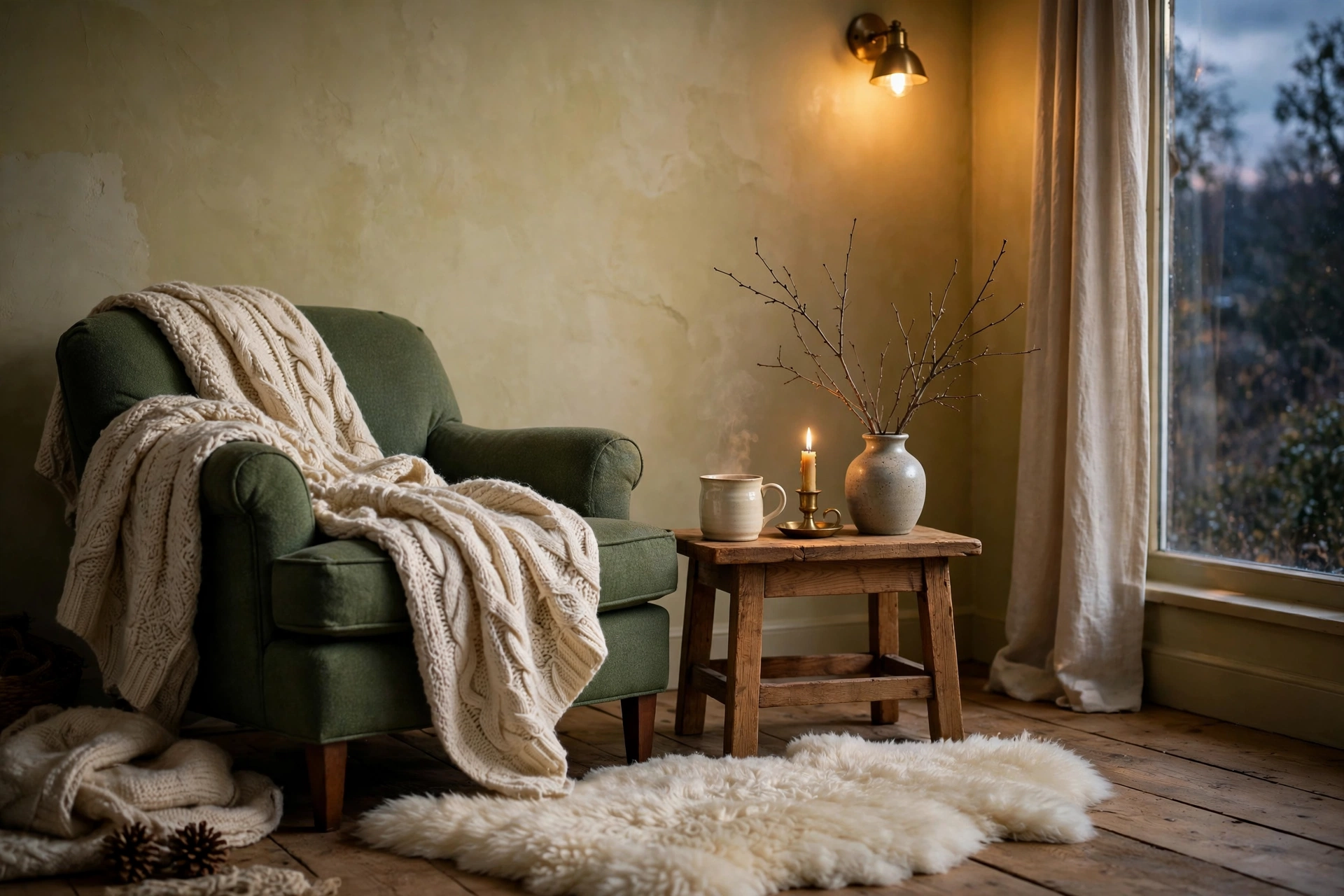
Every winter home needs at least one dedicated cozy spot — a chair, a light, a blanket, and something to read or sip:
- The reading chair: your most comfortable chair + a floor lamp + a side table + a throw. That’s the whole formula. Move the chair near a window for daytime or near the fireplace/TV corner for evenings.
- The window seat effect: no built-in seat? A wide windowsill cushion or a bench under a window with pillows and a throw creates the same feeling.
- The bath upgrade: winter is bath season. Eucalyptus bundle on the showerhead ($5), a candle, and the door locked for 20 minutes. The cheapest spa in existence.
Winter Scents and Simmers
Your holiday simmer pot doesn’t retire in January — it just changes clothes:
- Winter simmer: apple slices, cinnamon, a few drops of vanilla, rosemary sprig. Cozy without screaming “Christmas.”
- The 5-minute reset: open windows for 5 minutes even in cold weather (stale winter air is real), then simmer something warm. The contrast makes the house feel fresh and cozy.
- Eucalyptus in the shower: hang a bundle from the showerhead (not in direct water stream). Steam releases the scent. Replace every 2–3 weeks.
What to Do With the Post-Holiday Bare Spots
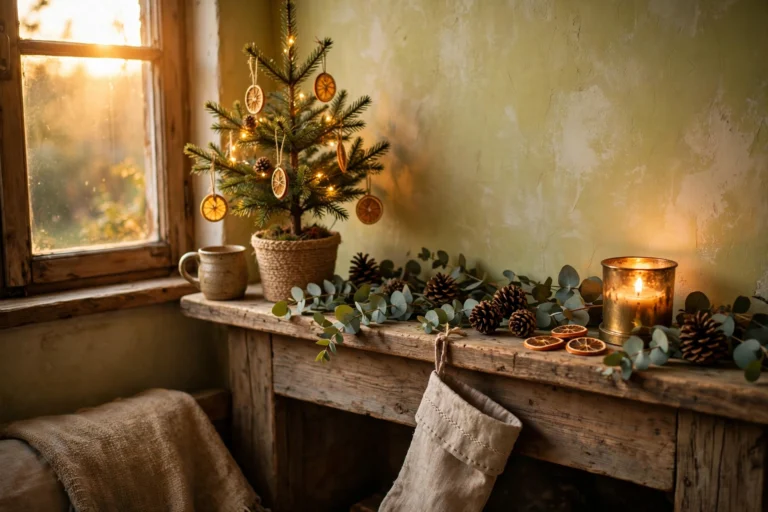
The mantel looks naked, the tree corner is empty, the entryway lost its wreath. Fill the gaps with winter — not Christmas:
- Bare branches in a tall vase: the single best winter decor item. Free from the yard, sculptural, lasts months. Add fairy lights for evenings.
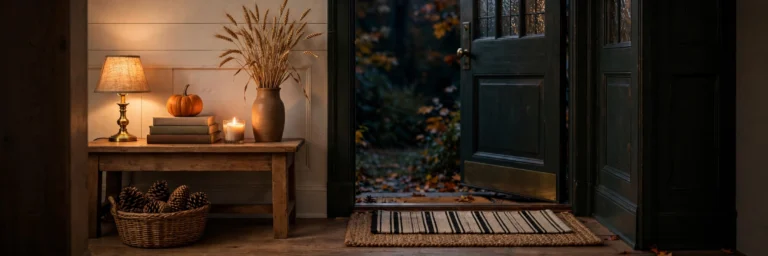
- Pinecones in a bowl: the ones from your Christmas decor, minus the red ribbon. Natural winter texture.
- Stacked firewood (even decorative): a small log holder by the fireplace — or a basket of birch logs anywhere — reads instantly as “winter cabin.”
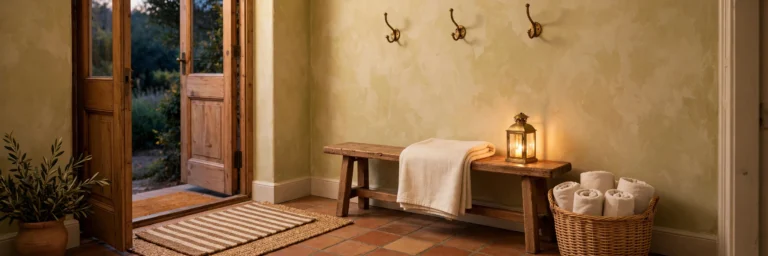
- Swap the wreath: replace the Christmas wreath with a plain greenery or eucalyptus wreath. The door still looks intentional without looking like you forgot to take Christmas down.
The $50 Winter Coziness Shopping List
Only buy what you don’t already own — most winter coziness is rearrangement:
| Item | Cost |
|---|---|
| Warm-white bulbs (pack) | $8–$10 |
| 2 velvet/knit pillow covers | $10–$15 |
| Battery tea lights (if needed) | $3–$5 |
| Eucalyptus bundle | $5–$8 |
| Tall vase (thrifted) | $3–$5 |
| Simmer pot ingredients | $3–$5 |
| Total | $32–$48 |
The Winter Evening Routine (Free)
The coziest homes run on rhythm, not purchases: lights low by 7pm, one warm drink, the reset walk (10 minutes — see our New Year organization reset), then the hygge corner. Do it three nights in a row and your home will feel different — because the feeling was never about the stuff.
How do I make my home feel cozy in winter without spending money?
Rearrange for warmth: lamps on and overheads off, throws and blankets displayed (not stored), one hygge corner set up, windows opened briefly then a simmer pot on. Light + textiles + scent = 90% of coziness, all free.
FAQ
How can I make my house cozy for winter on a budget?
Warm lighting (2700K bulbs, lamps instead of overheads), layered textiles (throws, pillows, rugs), natural winter elements (branches, pinecones), and scent (simmer pots, eucalyptus). Under $50 total if you need to buy anything at all.
What should I do with my home decor after Christmas?
Replace holiday-specific items with winter-neutrals: bare branches instead of the tree, greenery wreath instead of the Christmas wreath, pinecones without the red ribbon. Keep the fairy lights — they’re a winter staple, not a Christmas one.
How do I make a dark living room feel warmer in winter?
Mirrors opposite windows to bounce daylight, warm bulbs in every lamp, light-colored throws to reflect lamp glow, and candles or fairy lights at seating height. Dark walls + warm low light is actually the coziest combination there is.
What is hygge home decor?
The Danish concept of coziness as a lifestyle: soft lighting, natural materials, comfortable textiles, uncluttered spaces, and small rituals (candles at dinner, a reading nook). It’s less a decor style and more permission to prioritize comfort — which costs almost nothing.